Thursday, December 18

Genetically Modified Foods

Gene-edited Foods are Safe, Japanese Panel Concludes
Genetically Modified Foods

Gene-edited Foods are Safe, Japanese Panel Concludes

Japan will allow gene-edited foodstuffs to be sold to consumers without safety evaluations as long as the techniques involved meet certain criteria, if recommendations agreed on by an advisory panel yesterday are adopted by the Ministry of Health, Labour and Welfare. This would open the door to using CRISPR and other techniques on plants and animals intended for human consumption in the country. “There is little difference between traditional breeding methods and gene editing in terms of safety,” Hirohito Sone, an endocrinologist at Niigata University who chaired the expert panel, told NHK, Japan’s national public broadcaster. Now, Japan appears set to follow the U.S. example. The final report, approved yesterday, was not immediately available, but an earlier draft was posted on the ...
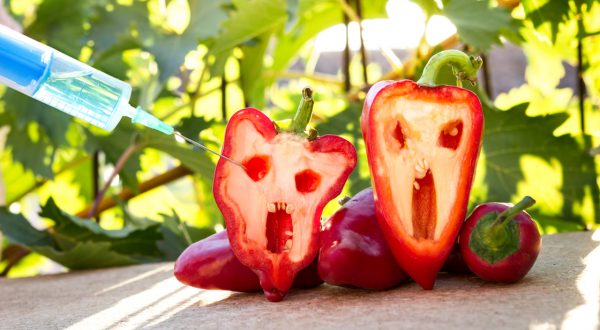
What are the Pros and Cons of GMO Foods?
Genetically Modified Foods

What are the Pros and Cons of GMO Foods?

A manufacturer creates GMOs by introducing genetic material, or DNA, from a different organism through a process called genetic engineering. Most currently available GMO foods are plants, such as fruit and vegetables. All foods from genetically engineered plants on sale in the United States are regulated by the Food and Drug Administration (FDA). They must meet the same safety requirements as traditional foods. There is some controversy over the benefits and risks of GMO foods. In this article, we discuss the pros and cons of GMO crops, taking into account their potential effects on human health and the environment. Pros The reasoning usually involves making crops more resistant to diseases as they grow. Manufacturers also engineer produce to be more nutritious or tolerant o...
Opposed to G.M.O.s? How Much Do You Know About Them?
Genetically Modified Foods

Opposed to G.M.O.s? How Much Do You Know About Them?

Most scientists agree that genetically modified organisms, or G.M.O.s, are safe to eat. But a new study suggests that the people who are most extremely opposed to them know the least about them. Researchers surveyed 501 randomly selected adults, testing their knowledge of G.M.O.s with a series of true/false questions — for example, the cloning of living things produces genetically identical copies (true), or it is not possible to transfer animal genes into plants (false). The study, in Nature Human Behaviour, also tested how strongly the participants opposed G.M.O.s by measuring on a seven-point scale the desire to regulate them, the willingness to eat them, and the inclination to actively oppose them by participating in protests or donating to anti-G.M.O. organizations. “This sho...
Are Genetically Modified Foods(GMOs) Safe?
Genetically Modified Foods

Are Genetically Modified Foods(GMOs) Safe?

Recently, in the news media, there have been various reports about the introduction of certain Genetically Modified, GM, crops, and seeds into the country. The technology is often called “modern biotechnology” or “gene technology”, sometimes also “recombinant DNA technology” or “genetic engineering.” It allows selected individual genes to be transferred from one organism into another, also between non-related species. Foods produced from or using GM organisms are often referred to as GM foods. Why are GMOs (including foods, seeds, crops, etc) produced? GM foods are developed – and marketed – because there is some perceived advantage either to the producer or consumer of these foods. What are the potential dangers of GMOs? According to an April 22, 2000 issue of Awake! Magazine: “B...
Are Genetically Modified Foods (GMOs) Safe?
Genetically Modified Foods

Are Genetically Modified Foods (GMOs) Safe?

Recently, in the news media, there have been various reports about the introduction of certain Genetically Modified, GM, crops, and seeds into the country. Examples of such include: the release of genetically modified cowpeas to farmers in the country; the release of two transgenic cotton hybrid varieties into the Nigerian Seed Market; the granting of permits by the Federal Government for confined field trials on genetically modified maize, rice, cassava, sorghum and cowpea to ascertain ability to resist insect attack; etc. All these despite growing opposition by a coalition of Civil Society Organisations, CSOs, against the introduction of Genetically Modified Organisms, GMOs, in the country. GMOs, according to the World Health Organisation, WHO, are organisms (i.e. plants, animals or m...
New Rules Govern How Modified Food Will Be Labeled
Genetically Modified Foods

New Rules Govern How Modified Food Will Be Labeled

As the federal government prepared for a shutdown, the U.S. Department of Agriculture late last week issued new rules regarding how genetically modified foods will now be labeled. Food safety advocates are blasting the rules, saying they will make it tougher for consumers to know if the food they buy has been genetically modified, and even some major food producers are expressing concerns. According to U.S. Secretary of Agriculture Sonny Perdue, the new National Bioengineered Food Disclosure Standard, which will now govern how manufacturers, importers, and retailers brand foods that have been bioengineered, "increases the transparency of our nation’s food system, establishing guidelines for regulated entities on when and how to disclose bioengineered ingredients. The department sa...
Letter: The Real Reason To Be Worried About cs
Genetically Modified Foods

Letter: The Real Reason To Be Worried About cs

We live in an age where access to knowledge on virtually any topic is at our fingertips. Yet, we are bombarded by misinformation on a daily basis. Modern advancements in scientific research are often sensationalized or disputed, with findings rarely reported to the public with the appropriate contexts and caveats. The term “GMO food” usually refers to an organism that has been modified in a laboratory setting or has had a direct transfer of genes into its DNA. Unfortunately, these foods are misunderstood. Due to the complexity of genetic research and the speed at which advancements are being made, there is an alarming lack of accessible, comprehensible resources by which to evaluate this topic from a public perspective. As a result, the general public is directed toward sources masqu...
Africa Doesn’t Need Genetically Modified Mosquitoes
Genetically Modified Foods

Africa Doesn’t Need Genetically Modified Mosquitoes

Some scientists have proposed genetically modified (GM) mosquitoes as a solution to controlling malaria, a scourge that has been around for centuries and is spread by mosquitoes. I am skeptical that this is the answer. Through CRISPR technology, a gene that prevents procreation is inserted in the lab and is passed on to mosquitoes in the wild. In essence, it rapidly transmits a sterilizing mutation through other members of the mosquito’s species, eventually wiping out the insects. Creating GM mosquitoes is a contentious topic. Supporters of the technology consider it a huge step forward in the war against mosquitoes and by extension, vector-borne diseases like malaria, dengue, yellow fever, and Zika. Critics of the idea, however, say it is dangerous to manipulate the DNA of any an...
How To Manage Menopause Wth A Plant-Based Diet
Genetically Modified Foods

How To Manage Menopause Wth A Plant-Based Diet

"If you’re a healthy adult woman, by the time you’re in your 40s or 50s, you’ve already spent decades learning how to tackle the ups and downs of your menstruation cycle, mastering the fine art of period management. The bad news is once menopause hits and your fertility game totally changes, you may have to start learning about your body and food-related needs all over again. Dr Jillian Forer, GP at Bondi Road Women’s Health Centre, tells SBS that the year leading up to your last period (also known as ‘perimenopause’) can be fraught with physical and often confusing changes. Dr Forer, who has specialised in the area of women’s health for over 30 years, explains that during menopause, the female body slowly produces less oestrogen. This is just one reason why many women will experi...
It May Be Carcinogenic, But Thank Goodness It’s Non-GMO
Genetically Modified Foods

It May Be Carcinogenic, But Thank Goodness It’s Non-GMO

"Perhaps nowhere is that more apropos than the ongoing stampede of marketers to proclaim their products as non-GMO. We now have GMO-free salt, water, and literally thousands of products from foods to household cleaners, none of which contain ingredients derived from GMO crops. But scare sells. A recent publicity barrage by Smirnoff, includes a slickly produced (and expensive, given the talent costs) TV commercial featuring actors Ted Danson, he of the in-forever-reruns “Cheers” series in which he played the jovial, but somewhat out to lunch bartender, and actress-author Jenna Fischer. They proudly announce that Smirnoff No. 21 Vodka is now made with non-GMO corn. A press release notes that the commercial uses two “American treasures” to get the word out about No. 21’s new GMO-free st...