Thursday, December 25

Genetically Modified Foods

Island Voices: Non-GMO Project Has A Dark Side
Genetically Modified Foods

Island Voices: Non-GMO Project Has A Dark Side

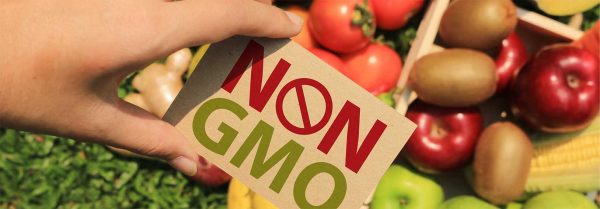
Most consumers have seen the Non-GMO logos on bread and many other food products while shopping at the grocery store. Today in North America, the Non-GMO Project Verified logo is on more than 50,000 food products. The first product to hit the market with the logo was in 2010, barely nine years ago. GMOs, known as genetically modified organisms, have attracted fierce criticism since they entered the food chain in 1994. Genetically engineered crops such as canola, corn, and soy are grown by farmers and enter the food chain. Since both the United States and Canada have a voluntary labeling regime for genetically modified food ingredients, it was almost impossible for anyone to avoid them. The only option was to go organic, which is quite often 20 percent to 30 percent more expensi...
Are You Scared of GMO Foods?
Genetically Modified Foods

Are You Scared of GMO Foods?

Scientists can do some amazing things with genes, from saving papayas from extinction to making apples last longer before turning brown, to creating variants of crops that reduce pesticide use. Some of these things may sound too good to be true and I understand if you're skeptical. How does this work? Is it safe? How do we know it's safe? What are the side effects? If you're asking these questions, you're like many Americans who question the idea of genetically modified organisms. Genetic modification has come a long way since ancient farmers first tinkered with the genes of the teosinte plant to develop the corn we have today. Yes, you read that correctly: genetic modification has been around since many centuries before we even knew genes existed. Although there are many techniques, th...
EU Authorizes 10 Genetically Modified Products
Genetically Modified Foods

EU Authorizes 10 Genetically Modified Products

BRUSSELS, July 26 (Xinhua) -- The European Commission on Friday authorized nine genetically modified (GM) products for food and feed uses and one as an ornamental cut flower. Among the authorized are cotton, maize, soybean, oilseed rape and carnation, which the European Union's executive arm said: "have gone through a comprehensive authorization procedure, including a favorable scientific assessment by the European Food Safety Authority." Genetic modification means that organisms such as plants, animals or microorganisms in which the genetic material (DNA) has been altered in a way that does not occur naturally. Different GM organisms include different genes inserted in different ways. This means that individual GM foods and their safety should be assessed on a case-by-case basis ...
Church in Ghana Debates Genetically Modified Food
Genetically Modified Foods

Church in Ghana Debates Genetically Modified Food

YAOUNDÉ, Cameroon - Although genetically modified food is commonplace in the United States, it is still controversial in places such as the European Union, which possibly has the most stringent regulations on the products in the world. This debate over GM food is now taking place in Africa, and the Catholic Church is taking part - although Church leaders are disagreeing on which path to take. In Ghana, the issue is at the forefront, since field trials on its first GM crop - the Bt cowpea, which is resistant to the pod-borer pest - have recently been completed. “GMOs can help us deal with agricultural challenges, including the problems with food insufficiency,” said Gaston Kofi Hunkpe, a catechist with the Catholic Church who holds a degree in clinical biochemistry. “So it’s a g...
Trump Orders Simpler Path for Genetically Engineered Food
Genetically Modified Foods

Trump Orders Simpler Path for Genetically Engineered Food

NEW YORK—President Donald J. Trump wants to make it easier for genetically engineered plants and animals to enter the food supply, and he signed an executive order this past week directing federal agencies to simplify the “regulatory maze” for producers. The move comes as companies are turning to newer genetic engineering techniques that make it easier to tinker with the traits of plants and animals. Greg Jaffe, biotechnology director at the Center for Science in the Public Interest, said the impact of the executive order would depend on the details of how it is carried out by federal agencies. Simply deregulating could make people lose confidence in genetically engineered foods, he said. “There needs to be an assurance of safety for those products,” said Jaffe, who was among thos...
Why Haven’t Genetically Engineered Crops Made Food Better?
Genetically Modified Foods

Why Haven’t Genetically Engineered Crops Made Food Better?

One of the arguments that have been advanced to promote genetically engineered crops is that the techniques have the potential for improving the food we eat. Crops could be engineered so that they provide nutrients they currently don't or so that good nutrition is in reach of poor people in developing nations. In fact, the technology does have that potential, and a couple of efforts have been made to do exactly this. Yet, decades into the GMO era, all of the engineered crops on the market provide enhanced productivity and other benefits to farmers but nothing for the people who ultimately end up eating the results. So why the huge gap between potential and reality? The huge number of problems involved is the subject of a review in Nature Plants. Far from golden The people behind t...
More Knowledge Changes Opinions on GM Food
Genetically Modified Foods

More Knowledge Changes Opinions on GM Food

Jonathon McPhetres, a Ph.D. in psychology from the University of Rochester, admits he’s “personally amazed” what we can do with genes, specifically genetically modified food—such as saving papayas from extinction. “We can make crops better, more resilient, and more profitable and easier for farmers to grow so that we can provide more crops around the world,” he says. Yet the practice of altering foods genetically, through the introduction of a gene from a different organism, has courted controversy right from the get-go. While genetically modified organisms (GMOs) are considered safe by an overwhelming majority of scientists, including the National Academy of Sciences, the World Health Organization, and the American Medical Association, only about one-third of consumers share that vi...
The E.U is Strict on G.M. Crops, But is it Logical?
Genetically Modified Foods

The E.U is Strict on G.M. Crops, But is it Logical?

The arguments about risk and unnaturalness that support the European Union’s strict policy on genetically modified crops don’t stand up to scrutiny, a new study concludes. The paper in Transgenic Research also says that the use of genetically modified (GM) plants is consistent with the principles of organic farming. The EU’s rules on genetically modified organisms (GMOs) are so restrictive that it is virtually impossible to get an authorization for cultivating a GM crop within the EU—which means that only one GM crop has prior authorization in the EU. And even if a GMO crop does get authorization, individual member states may still ban the crop. This is untenable, argue researchers from the University of Copenhagen and the Technical University of Denmark, because EU regulation may...
Rwanda Must Pick a Side in its GMO Debate
Genetically Modified Foods

Rwanda Must Pick a Side in its GMO Debate

Like a phoenix, Rwanda is fast rising towards a future that is inclusive, innovative and self-reliant. It is in this vein that last year, the Rwanda Environment Management Authority (REMA) began drafting a law seeking to regulate the country’s use of genetically modified organisms if and when it adopts their use. This policy framework would guide the import, distribution, and cultivation of genetically modified crops in the country. Not many Rwandans are excited about the prospects of GMOs, even as a measure to ensure food security in the region, as the Ministry of Agriculture says. While some groups’ sentiments are around the long-term effects of consuming genetically modified foods, many are more concerned, and legitimately so, about the politics of this industry given that only a han...
GMO’s Are In Our Food, But We Aren’t Being Told About Them
Genetically Modified Foods

GMO’s Are In Our Food, But We Aren’t Being Told About Them

In 1996, the first genetically modified organisms (GMOs) were introduced in Canada. Today, there are more than 81 genetically modified foods approved for sale and use in our food products — but you’d never know from reading their labels. In Modified, a documentary from CBC Docs POV, filmmaker Aube Giroux goes on a personal journey to understand more about how GMOs have changed farming and why GMOs aren’t labeled on food products in Canada. “While many countries around the world were choosing to label them, Canada and the United States decided against it,” says Giroux in the film, remembering when the first GMOs came on the market. “So if you wanted to avoid GMOs, you had to become a bit of a detective.” Essentially, GMOs are created when genes are transferred between organisms that c...